
Women’s Rights and the Freedom to Speak
By Jasmin Faulk, Executive Director - WoLF
On Friday, October 23, 2026, I attended the Portland Thorns game with roughly twenty fellow advocates for women’s sex-based rights. We came to cheer for women's soccer and to stand publicly for women’s sex-based rights in sports. We knew our message was going to be controversial among the Thorn fans. However, we did not expect the physical aggression that followed.
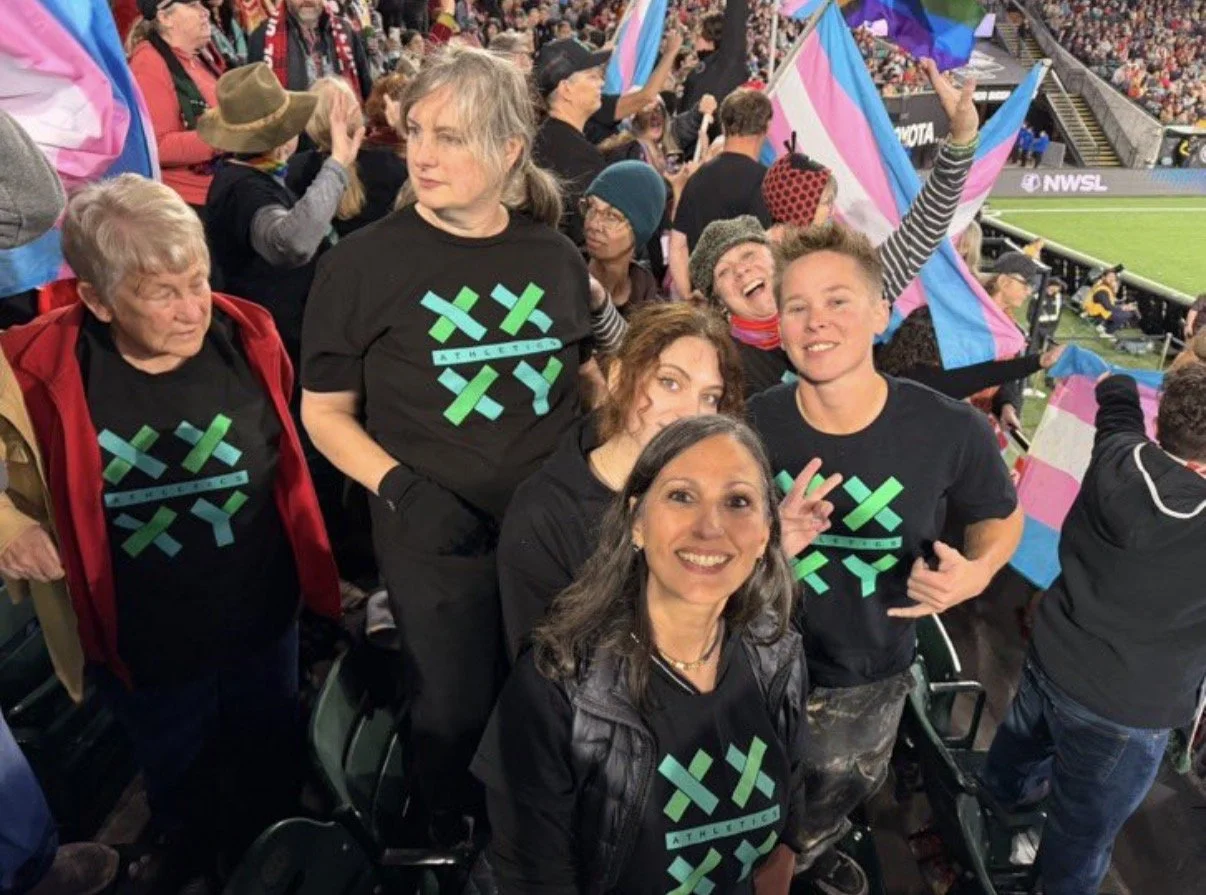
Photo Credit: Brandi Kruse
I want to share what I witnessed firsthand and why it matters beyond one evening at a soccer game. What happened raised two deeply connected concerns: how women’s rights are under attack, and whether we can express our concerns and convictions without being intimidated into silence.
The match at Providence Park was billed as Fan Appreciation Night. We went with the full intention to support the Thorns and participate in the evening’s enthusiastic chants and cheers. We entered with our XX-XY Athletics shirts covered because we feared being denied admission if our message was visible. That concern alone deserves reflection. We were attending a women’s sporting event, yet we felt we needed to conceal clothing expressing scientific fact which stands in support for female sports.
After halftime, we uncovered our shirts and stood peacefully. Some members of our group held a banner reading “Save Women’s Sports.”
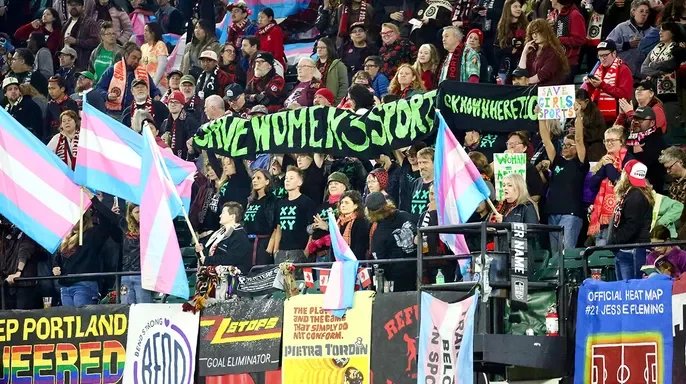
Once the crowd realized what we were doing, we were surrounded. Trans-activists started booing and shouting profanities and quickly engulfed us with numerous large transgender pride flags on rigid poles. Those poles struck members of our group on their heads and bodies. We repeatedly asked them to stop making physical contact.
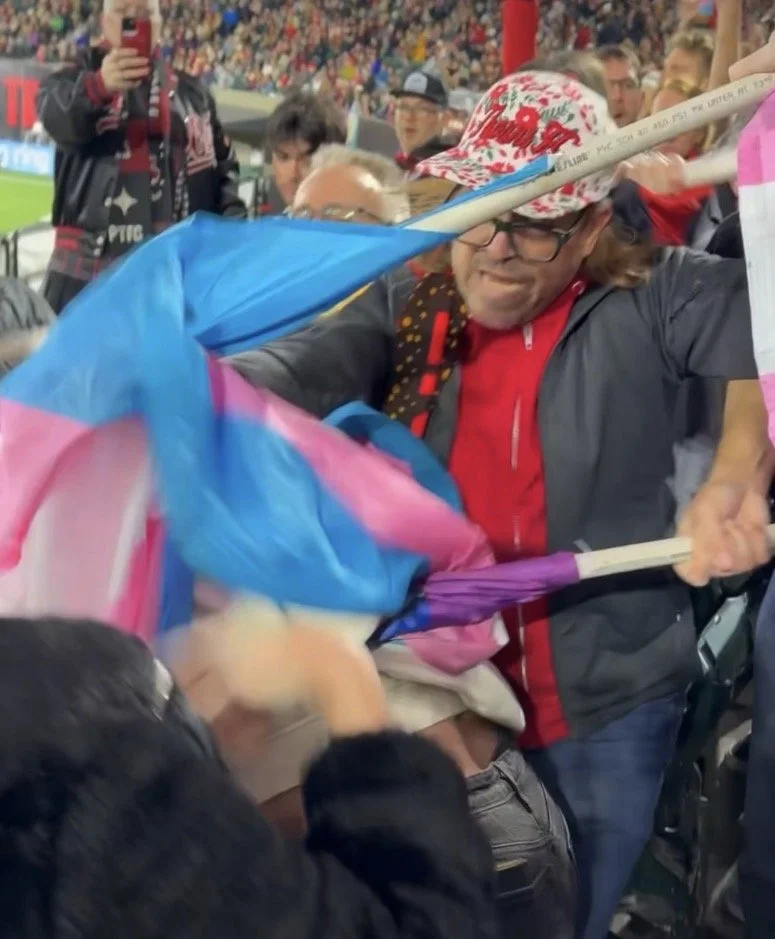
“You can wave your flags,” we said.
“Just please don’t touch us.”
The contact continued, I too was struck multiple times. The shouting and confrontation continued. I saw women shoved, including one woman in our group pushed down a row. Beer was thrown at us. People made vulgar gestures and continued their verbal abuse. Our small group faced a crowd that appeared to number in the hundreds, with hostility coming from multiple sections of the stands.
Security personnel were present. They stood and watched. By my estimate, about ten to fifteen minutes passed before they intervened. When they did, they forcibly removed all members of our group. We repeatedly asked why we were being ejected, but they never gave an explanation, and the people who had been physically aggressive toward us were not facing any consequences.
OutKick’s reporting and the public account shared by reporter Brandi Kruse who also attended the game, describe the confrontation and removals. My own account comes from being there, among the women asking others to stop touching us and asking both security and Portland PD why we were removed.
We were willing to stand beside people who disagreed with us. We acknowledged their freedom to wave their flags and wear their pro-trans gear. We asked for the most basic boundary in return: respect for our physical safety and our right to express our views.
For me, that is where the questions about women’s rights and freedom of expression and speech meet.
The criticism we received in part was that we were “making a scene” at a game where no trans athletes competed; but our message goes beyond one game or one sport, our concern revolves around the fact that females do not have guarantees that all girls and women’s sports are for biological females only. And even more concerning is the fact that women do not have the right to voice that.
Female athletes deserve fair opportunities to compete, and women deserve to advocate for those opportunities openly. People can challenge our position. They can make their own arguments and carry their own signs. None of that requires striking or shoving the women (and the men who were in our group) with whom they disagree. It also does not warrant silencing us and denoting us our constitutional right to voice our position.
We had one message only: women’s lives and opportunities matter, and women should have a meaningful voice in decisions affecting them.
When women face physical intimidation for defending sex-based boundaries, the consequences reach beyond those directly involved. I think about the woman watching who shares our concerns but has never said so publicly. I think about the girl who wants to ask a question about fairness in her sport. An incident like this can teach them that speaking carries a personal cost. They may decide it is safer to stay quiet.
That silence would leave important decisions about women’s lives to those most willing to shout others down.
Freedom of speech is essential to changing that. The First Amendment’s legal protections generally apply to government action. Whether those protections apply to particular stadium decisions requires a separate legal analysis. However, a culture of free expression also depends on how institutions and ordinary people respond to peaceful disagreement.
When peaceful speakers are removed while aggression appears to go unchecked, the lesson is dangerous. People can learn that making a scene is an effective way to get an opposing view removed. Institutions may find it easier to clear away the people being targeted than to confront those targeting them. Over time, that rewards intimidation and makes honest public discussion impossible.
There is a particular cruelty in telling women that we must accept this treatment as the price of expressing an unpopular view, albeit unpopular in certain spaces, but decisively the popular view of most Americans, who fear saying so. We should be able to say what we believe about our own rights without wondering whether someone will put their hands on us; whether a man can get away with yelling “F*CK YOU!” at women because they are standing up for their rights. That expectation should be uncontroversial, whatever anyone thinks about our position on sports.
I went to the game because I care about women’s sports, I care about women only spaces, I care about women’s safety, I care about women. Our ability to defend our rights depends on our ability to speak about them, especially in places where others would prefer that we remain silent.
Video:
Women’s Voices and Freedom of Speech | WoLF’s ED Jasmin Faulk on the Portland Thorns Incident