
RadFem Camp: Where Women Remember What Freedom Feels Like
By: Jasmin Faulk, Executive Director - WoLF
It’s not often—in fact, I don’t recall a time before this one—when I have felt fully immersed in a space that made me feel seen, valued, heard, respected, and loved for being a woman.
WoLF RadFem Camp did exactly that for me, and for so many extraordinary sisters who showed up in solidarity and sisterhood, nestled among forest trees that exuded maternal energy and beside ocean waves that carried Mother Earth’s magic. There was something profoundly grounding about being held by nature while also being held by women—by truth, by courage, and by collective memory.
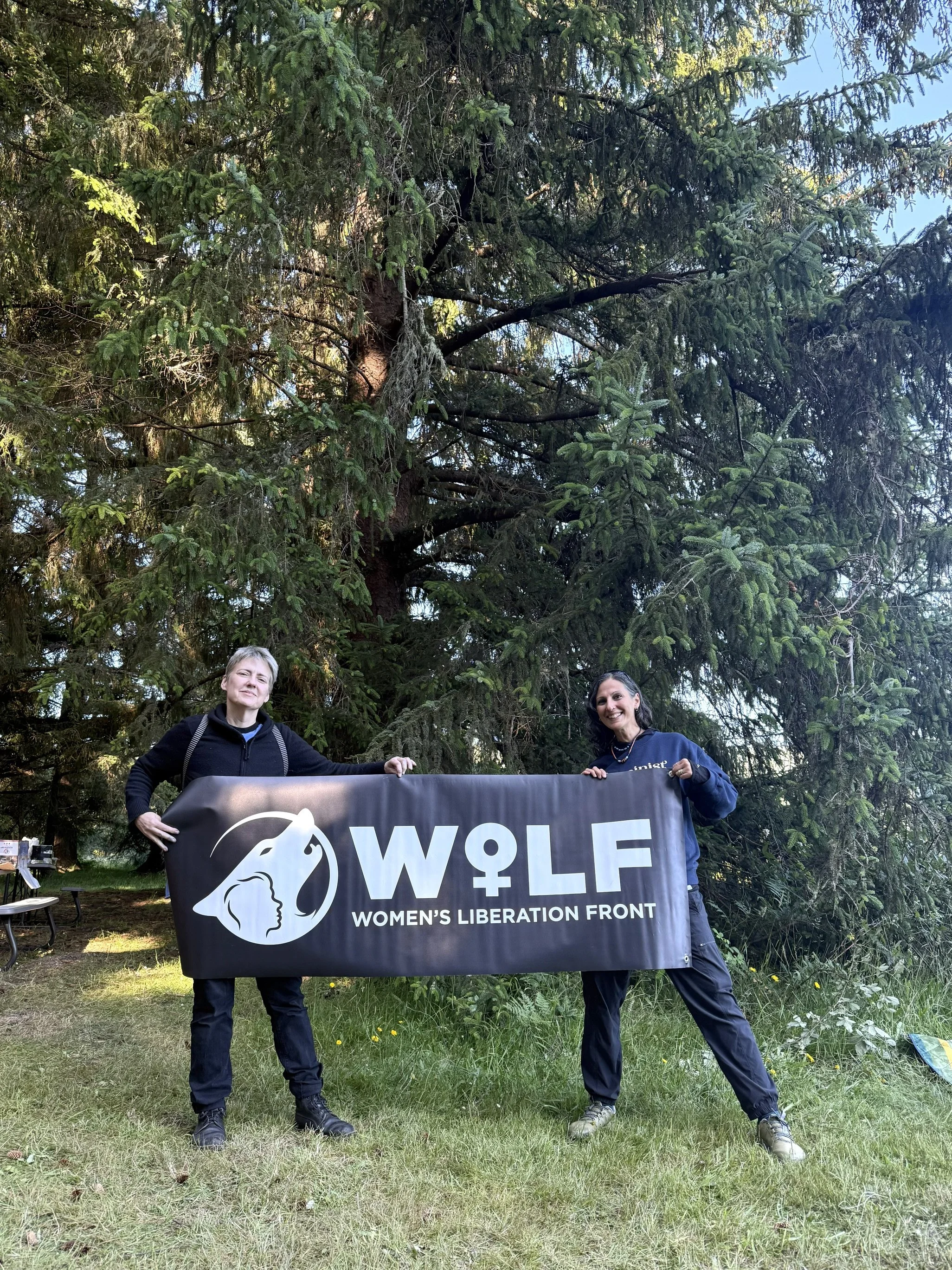
When women share space and are given the freedom to show up as their full selves—without apologizing, without compromising their fullness, and without holding back their intellectual brilliance—something deeply powerful unfolds.
Voices rise with confidence, and the echo of equally resonant voices answers back in affirmation.
As women, we have so much to offer the world beyond the roles we are so often reduced to: maternal, nurturing, responsible, self-sacrificing. At RadFem Camp, women arrived without filters. The spectrum of what it means to be a woman was breathtaking. Femininity expressed itself in color, softness, and whimsy, as well as in strength, groundedness, fierceness, and fire.
This is what it means to be a woman.
Not what you wear. Not how you present—although the women at RadFem Camp were stunning in their diversity of expression—and certainly not by merely claiming to be. Being a woman is the living expression of creation, creativity, preservation, resilience, and love. It is embodied truth. It is history carried in our bones.
What made this camp so special was that it was intentionally designed not merely as a retreat, but as a living feminist ecosystem. Over several days, women gathered to learn, strategize, rest, build, and dream together. Mornings and afternoons were filled with presentations on radical feminism, movement strategy, legal cases, and organizing skills. Workshops invited women into deeper political analysis and practical action. Discussions explored where our movement has been, where it is now, and where it must go next.
But camp was never only about formal programming.
It was also in the spaces between.
In the walks to the river.In the talks around the fire.In the songs, the art, the friendship bracelet making. In the laughter over shared stories, the tears over worry. In the conversations that began over dinner and continued long after sunset.
That, too, is movement work.
We shared three meals daily, prepared by a wonderful group of women who infused love and nourishment into every dish, thoughtfully catering to all kinds of dietary needs. Each meal was served by generous volunteers who offered not just food, but warmth—exchanging smiles, kind words, and gentle care with hungry and grateful campers.
For as long as humanity has roamed this earth, food has been a sacred point of reunion and gathering. Meals create opportunities to exchange thoughts, share feelings, challenge ideas, and celebrate in laughter. Around those tables, community deepened.
The nourishment of the body was beautifully balanced by the nourishment of the mind.
Speakers showed up with generosity, wisdom, and urgency—eager to inspire motivation, enthusiasm, and courage in women who have bravely chosen to deepen their commitment to protecting and safeguarding women’s lives, freedoms, rights, dignity, and safety. These were not abstract conversations. They were grounded in real legal battles, cultural pressures, policy work, advocacy, organizing, and the daily labor of resistance.
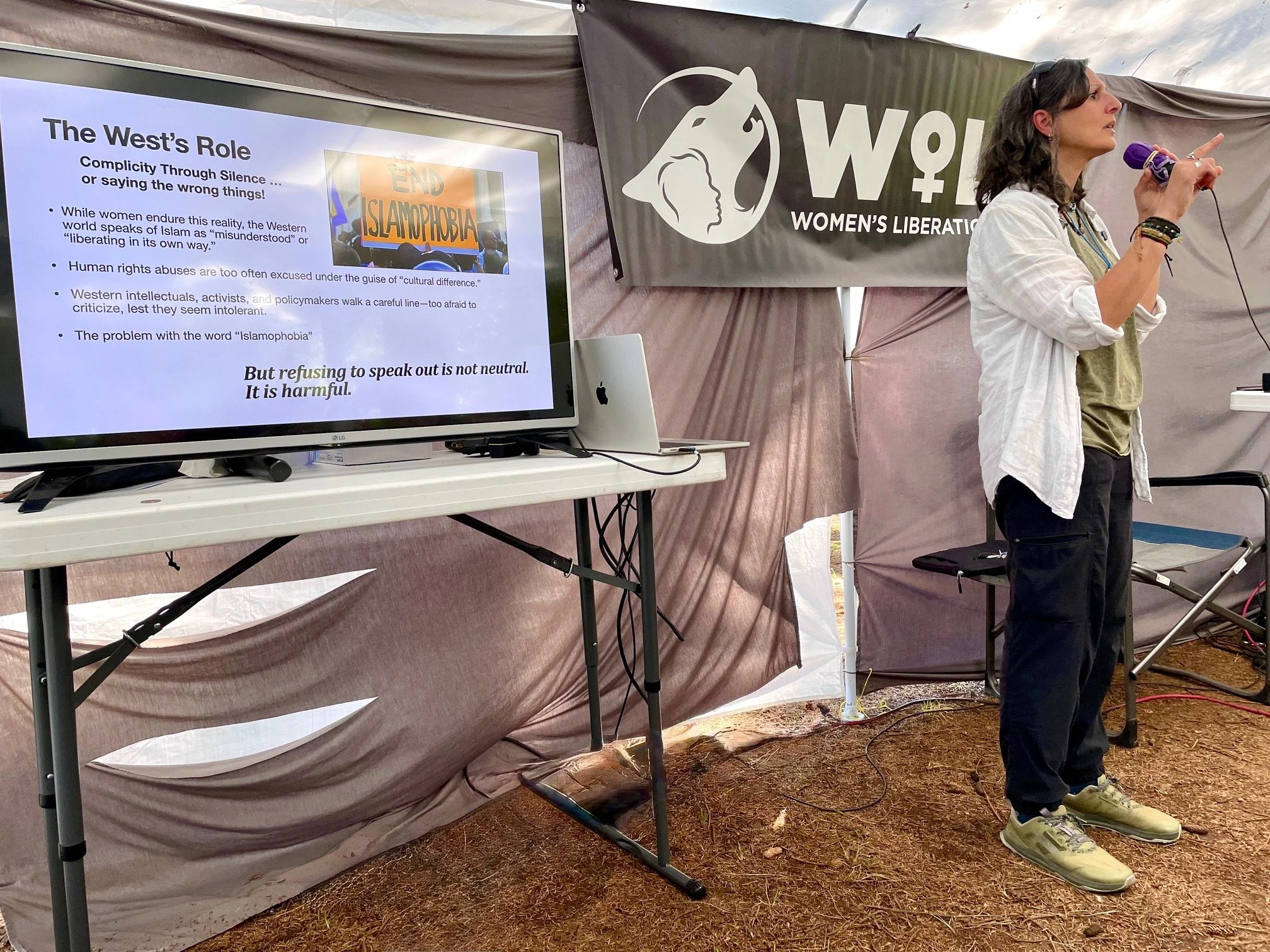
As the new Executive Director of Women’s Liberation Front (WoLF), I was especially moved witnessing the living embodiment of our mission: to restore, protect, and advance the rights of women and girls. So much of WoLF’s work happens in courtrooms, legislative spaces, policy meetings, strategy calls, and behind computer screens. But camp reminded me that the heart of the work is women themselves.
Not institutions.
Not slogans.
Women.
Their courage. Their clarity. Their willingness to keep showing up.
In every single moment during camp, I felt overwhelmed by one truth: how urgent it is to safeguard women’s spaces.
Spaces where women are not policed.
Spaces where women are not expected to shrink themselves.
Spaces where women are not required to negotiate their boundaries for the comfort of others.
Our actions as women have been scrutinized by societies shaped by patriarchy—by both men and women who have forgotten, or been conditioned to ignore, how vulnerable life can be for women and girls. Since the dawn of patriarchy, women have had to fight for privacy, safety, dignity, autonomy, and sovereignty over our own bodies and lives.
Women-only spaces are not luxuries. They are necessary.
They offer respite from constant emotional, physical, and social subordination. They make possible something increasingly rare: psychological liberation. In these spaces, women can build friendships, political community, trust, and solidarity in ways that are difficult—if not impossible—when male presence shapes the environment.
At camp, I saw what freedom can look like.
Not perfect freedom. But a glimpse of it. And that glimpse matters.
Because once women experience what it feels like to breathe fully, speak freely, think boldly, and exist unapologetically in the company of other women, something changes. You cannot easily return to silence.
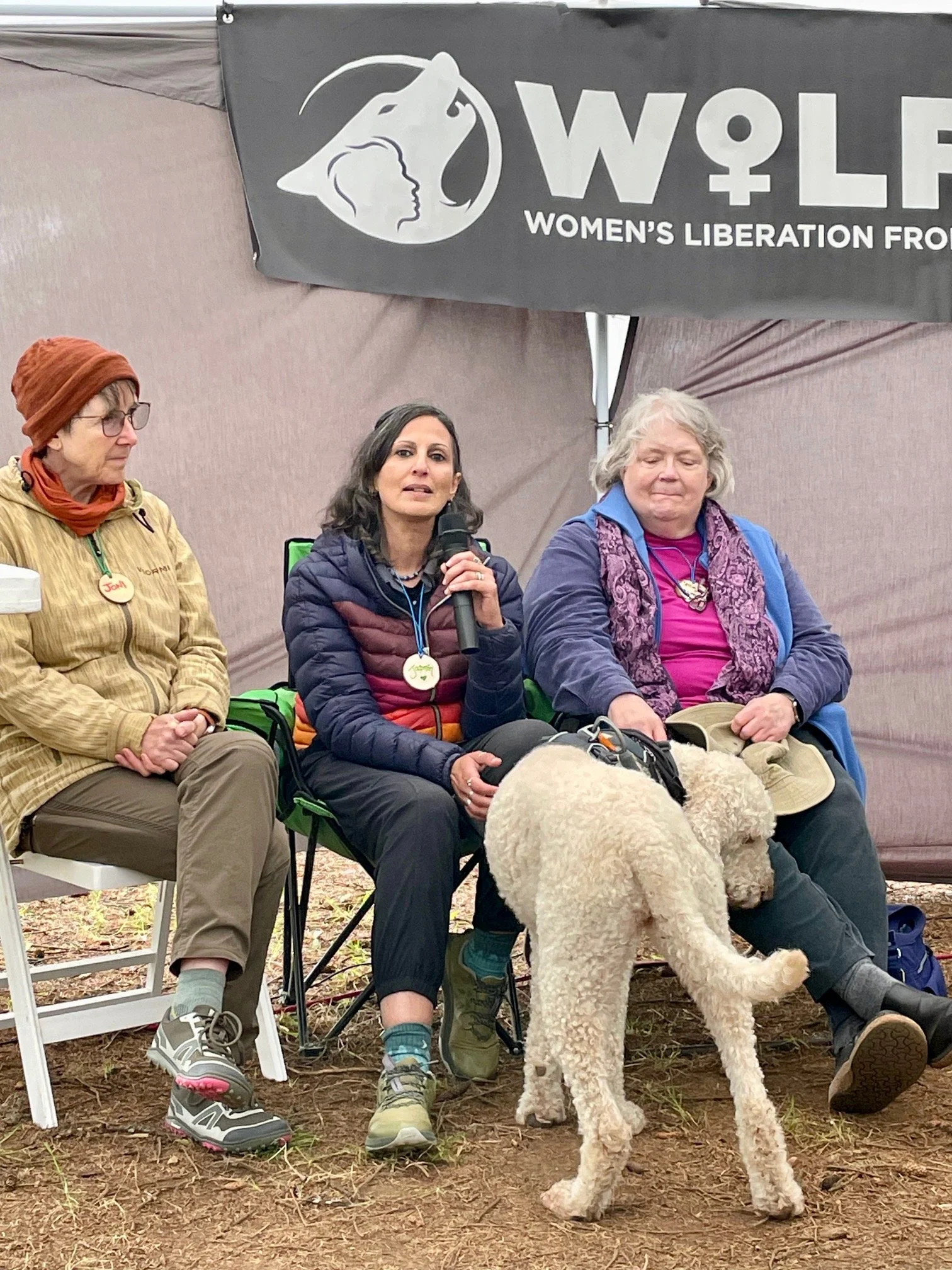
In the space we shared at camp, women from all walks of life rooted themselves in the radical notion that women matter. Mothers, wives, and daughters; straight, lesbian, and bi; liberal, conservative, and moderate; atheist, faith-based, and agnostic. The common thread was our shared truth as women.
And for that, I want to offer deep gratitude to the extraordinary women who made this possible.
A special shoutout to the incredible camp organizers who worked tirelessly behind the scenes, both in preparation and throughout camp, with patience, care, and remarkable competence. Every logistical detail—registration, safety, scheduling, food, setup, cleanup, accessibility, communication, volunteer coordination—required hours upon hours of invisible labor.
This is the part many people do not see. Spaces like this do not simply happen. They are built. They are protected. They are maintained through sacrifice, devotion, and love.
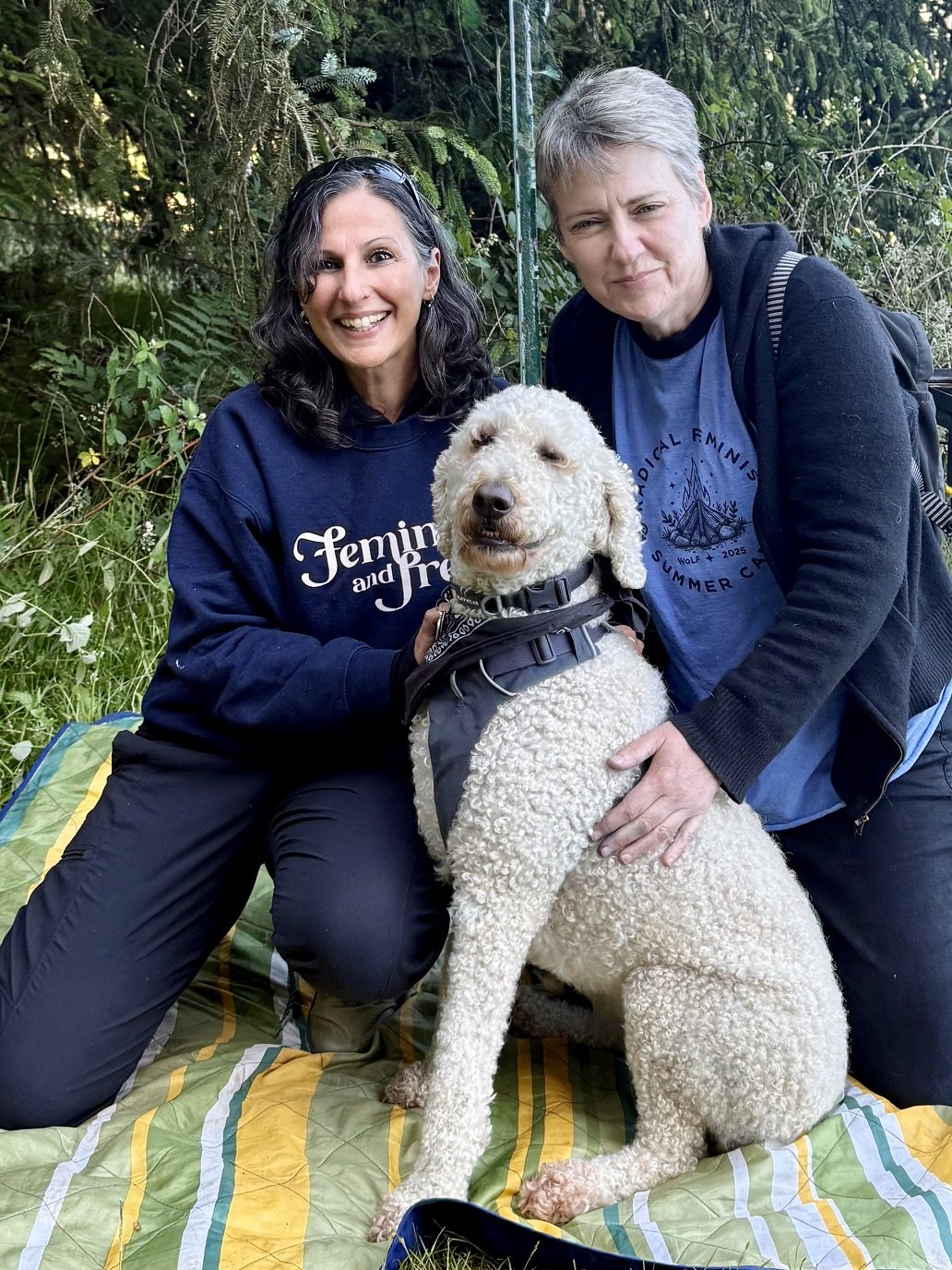
When people say “it takes a village,” they are speaking about women like these: mothers, sisters, aunties, daughters, grandmothers, and altruists who understand that building women-centered spaces is itself revolutionary work.
At WoLF, we are a small but mighty organization doing extraordinarily important work. Much of what we accomplish is made possible by women who give their time, expertise, labor, resources, and hearts because they believe women deserve better. They believe women and girls deserve freedom, safety, truth, and justice. And they act on that belief.
RadFem Camp reminded me why this work matters so deeply.
Movements are sustained not only by policy victories or legal wins, but by relationships. By community. By spaces where women can recharge, reconnect, and remember who we are.
I left camp feeling more grounded, more inspired, and more committed than ever.
I left reminded that sisterhood is not an abstract ideal.
It is real.
It is tangible.
It is powerful.
And it is worth protecting.
To every woman who attended, volunteered, organized, cooked, spoke, cleaned, coordinated, donated, and contributed in ways big and small—thank you.
You made magic. And in doing so, you helped build something our world desperately needs:
A place where women can simply be free.